Report
The Generative Portrait of Poland: how six language models talk about Poland to people and companies from 12 countries
The report “The Generative Portrait of Poland” shows how six language models talk about Poland to people and companies from 12 countries. It was prepared jointly by Brand Semantics, the report's publisher, and the AI Business Center Foundation, its knowledge partner. The AI Business Center Foundation (AIBC) is a think tank and advisory partner that helps the boards of construction, industrial and technical-services companies adopt artificial intelligence so that it delivers measurable results and builds competitive advantage.
- answers from language models
- more than 14,500
- models · countries · languages
- 6 · 12 · 11
- measurement period
- 25 Aug – 2 Nov 2026
- report release
- 10 Nov 2026
Poland’s image is no longer shaped only by the media and search engines. It is also shaped in the answers of language models
Someone in Madrid asks a language model where to go for a cheap autumn weekend. A purchasing department asks whom to contract production to, and a board asks where to build a plant. Each gets a ready answer within seconds, and in that answer Poland is either there or it is not.
The report “The Generative Portrait of Poland” examines this across more than 14,500 answers from language models. It was prepared jointly by Brand Semantics (opens in a new window), the report’s publisher, and the AI Business Center Foundation, its knowledge partner. The author is Grzegorz Miłkowski, President of the Management Board of the Foundation. The report is published under the patronage of the Business Centre Club (opens in a new window).
The method in plain words
The study was not a handful of questions typed into a chat window. A conversation like that runs differently for everyone and cannot be repeated or counted. The same set of questions went to six models at the same time: ChatGPT, Gemini, Claude, Perplexity, Grok and DeepSeek.
Personas from 12 countries
The questions were asked by personas: characters from 12 countries described for the purposes of the study, such as a parent looking for a university for their child, a couple planning a weekend or a purchasing department comparing suppliers. Business personas include, for example, the board of a US company asking for “a final go/no-go” before its decision, a Chinese company looking for a warehouse serving Germany and Scandinavia (Poland or Hungary, rail or sea) and a British company that, after Brexit, wants a plant in the EU to avoid customs friction. Each persona asked in the language of its market.
Questions about decisions
No question was “what do you know about Poland”. The questions concerned everyday decisions: where to go, where to study, where to build a plant, how to vet a business partner. Some named Poland and some did not. Only the questions that do not name Poland show whether a model brings it in of its own accord.
The scale of the study
The models received 1,400 questions in 11 languages, half on behalf of individuals and half on behalf of companies. Six models returned 8,400 answers. With additional measurements, including a separate test for companies, the full programme exceeds 14,500 answers.
Markets of the study
12 countries covered by the study
The personas from each country asked in the language of their market.
The study's countries: China, Czechia, France, Spain, Germany, Norway, Slovakia, Sweden, Ukraine, United States, United Kingdom, Italy.
- China
- Czechia
- France
- Germany
- Italy
- Norway
- Slovakia
- Spain
- Sweden
- Ukraine
- United Kingdom
- United States
Source: “The Generative Portrait of Poland” (2026) (opens in a new window)
One measure for every answer
Each answer was assessed by the same model judge. The assessment covered whether Poland appears, alongside which countries, whether it is recommended and which sources the answer cites. The results were checked through the five control layers described in the report’s annex.
A dated measurement
The questions were sent through the models’ official interfaces (APIs), the same channel that applications and companies use. The main study ran from 25 August to 28 September 2026, and control and additional measurements ran from 20 October to 2 November 2026. The models’ answers change over time, so the report describes the state within that window.
Study calendar
From the first question to the release of the report
The models' answers change over time, so the report describes the state within this window.
Timeline of the study in 2026: main study from 25 August to 28 September, measurement of the companies' shortlist on 30 September, control and additional measurements from 20 October to 2 November, release of the report on 10 November.
- Main study25 August – 28 September
- Measurement of the companies' shortlist30 September
- Control and additional measurements20 October – 2 November
- Release of the report10 November
Source: “The Generative Portrait of Poland” (2026) (opens in a new window)
Full description of the method: “The Generative Portrait of Poland” (2026), “How this study was made” and the methodological annex (opens in a new window).
Poland for business: almost always present, in a role that depends on the question
When a company asks without naming Poland, the models mention it in 98.4% of 576 answers and explicitly recommend it in 82.5% of the answers with a mention. This comes from a separate shortlist measurement on 30 September 2026. The countries that most often appear alongside Poland are Czechia (79.2%), Romania (74.1%) and Hungary (66.7%).
Report data · part II, chart 2.1
The companies’ shortlist
Share of the 576 answers in which the country appears; the questions do not name Poland (measurement of 30 September 2026).
Bar chart: Poland appears in 98.4% of 576 answers to company questions that do not name it, Czechia in 79.2%, Romania in 74.1%, Hungary in 66.7%, Germany in 61.6%, Slovakia in 56.8%, Bulgaria in 35.9%, Austria in 33.0%, Portugal in 31.6%, Lithuania in 27.4%.
- Poland98%
- Czechia79%
- Romania74%
- Hungary67%
- Germany62%
- Slovakia57%
- Bulgaria36%
- Austria33%
- Portugal32%
- Lithuania27%
Source: “The Generative Portrait of Poland” (2026) (opens in a new window)
Poland’s role depends on the decision area. In questions about sales markets, Poland is explicitly recommended in 93.1% of the answers with a mention, in questions about engineers in 93.0%, about contract manufacturing in 69.4% and about regional logistics in 62.3%. Each area comprises 12 questions and 72 answers.
Report data · part II, chart 2.3
The area decides the recommendation
Each area: 12 questions, 72 answers; the questions do not name Poland.
Bar chart for eight decision areas of companies. Poland appears in 95.8–100% of answers in every area. Explicitly recommended: sales markets 93.1%, engineering talent 93.0%, shared-services and IT centres 90.3%, grants and economic zones 90.3%, nearshoring location 81.2%, partners and suppliers 80.0%, contract manufacturing 69.4%, regional logistics 62.3%.
- Poland in the answer
- explicitly recommended (in answers with a mention)
- 82.5: explicitly recommended, measurement overall
- sales markets in Central and Eastern Europe100%93%
- engineering talent99%93%
- shared-services and IT centres100%90%
- grants and economic zones100%90%
- nearshoring location96%81%
- partners and suppliers97%80%
- contract manufacturing100%69%
- regional logistics96%62%
Source: “The Generative Portrait of Poland” (2026) (opens in a new window)
In logistics, Poland loses on geography, not on cost. When a company asks about a single warehouse for the whole of Europe, the models point to the Netherlands and Germany, because delivery to the west from there takes two to three days. Cost is Poland’s argument in every one of these answers.
Source: “The Generative Portrait of Poland” (2026), Part II, chapters 2, 4 and 10 (opens in a new window).
Industry needs proof of maturity
To suppliers, the models describe Poland as a base that is growing, and Germany and Italy as reliable. This is the picture in 9 of the 14 answers about suppliers in which Poland is not explicitly recommended.
When a company asks for names in a specific industry, it gets a Polish company in 99 of 150 answers: in defence in 18 of 18, in furniture in 11 of 12. Asked for certified Polish component suppliers, the answers name a Polish company in 5 of 30 cases, even though 28 of them give some names.
Report data · part II, chart 5.2
Companies on demand
Answers with at least one Polish company; number of questions in the industry in brackets. 25 questions of the main study, 150 answers.
Bar chart: answers with at least one Polish company by the industry of the question. Defence 18 of 18, rebuilding Ukraine 6 of 6, furniture 11 of 12, grocery retail 10 of 12, energy 5 of 6, games and start-ups 9 of 12, WMS warehouse systems 21 of 30, automotive and batteries 14 of 24, component suppliers 5 of 30. In total 99 of 150, or 66.0%.
- 66.0%: all industries together (99 of 150)
- defence (3)18 of 18
- rebuilding Ukraine (1)6 of 6
- furniture (2)11 of 12
- grocery retail (2)10 of 12
- energy (1)5 of 6
- games and start-ups (2)9 of 12
- WMS warehouse systems (5)21 of 30
- automotive and batteries (4)14 of 24
- component suppliers (5)5 of 30
Source: “The Generative Portrait of Poland” (2026) (opens in a new window)
The report draws a conclusion for industrial promotion. It does not need more content about growth. It needs content that is proof: lists of certified subcontractors with names and standard numbers, references from customers in Germany and Scandinavia, data on punctuality and quality. That content should be presented the way a procurement manager asks for it, in English and in German.
The second observation concerns company names. Asked about the largest Polish companies, the models name KGHM in each of the 144 answers. In the answers to company questions, KGHM appears in 21 of 4,200, and the most frequent name is Krajowy Rejestr Długów, a Polish debt register (143 answers), because that is where a business partner is vetted. A model does not bring a company into an answer because it is large, but because it answers the question.
Report data · part II, chart 5.1
Two lists of companies
The same 13 names in both panels. Different axes and measurements: the panels are not connected. Right panel: number of answers.
Two bar charts with the same 13 names. Asked about the largest Polish companies, the models name KGHM in 100% of 144 answers, PGE and PKO Bank Polski in 99.3%, PZU in 96.5%, Allegro and Orlen in 91.0%, CD Projekt and LPP in 84.7%. In the 4,200 answers to company questions KGHM appears in 21, and the most frequent names are Krajowy Rejestr Długów (143), BIG InfoMonitor (97), PSE (95), No Fluff Jobs (71) and Hays Poland (53), none of which appears in any answer on request.
- the canon (companies on request)
- in use only
companies on request, % of portrait answers (n 144)
- KGHM Polska Miedź100%
- PGE Polska Grupa Energetyczna99%
- PKO Bank Polski99%
- PZU97%
- Allegro91%
- Orlen91%
- CD Projekt85%
- LPP85%
- Krajowy Rejestr Długów (KRD)0%
- BIG InfoMonitor0%
- Polskie Sieci Elektroenergetyczne (PSE)0%
- No Fluff Jobs0%
- Hays Poland0%
companies in use, % of answers to questions from companies (n 4,200)
- KGHM Polska Miedź21
- PGE Polska Grupa Energetyczna64
- PKO Bank Polski15
- PZU1
- Allegro93
- Orlen67
- CD Projekt18
- LPP4
- Krajowy Rejestr Długów (KRD)143
- BIG InfoMonitor97
- Polskie Sieci Elektroenergetyczne (PSE)95
- No Fluff Jobs71
- Hays Poland53
Source: “The Generative Portrait of Poland” (2026) (opens in a new window)
Katowice appears in 9.6% of the study’s 8,400 answers, and 635 of those 806 answers were given to companies. It most often appears alongside Gliwice, Tychy, the A4 motorway and the Polish Investment Zone. In the models’ answers, this is the industrial base of the south.
The conclusion for a single company
The report examines how models talk about a country. For companies that want to appear in answers by name, it draws a specific conclusion: what is needed is content that answers the buyer’s decision situation rather than the question “who are we”.
The Foundation measures the same phenomenon for a single company in its brand research in language models: whether the company appears in the answers, how it is described and which sources the model draws on.
Poland for people: mentioned more often than recommended
In response to 174 questions from individuals that do not name Poland, the models mention it in 71.3% of 1,044 answers. When the question points to a region that includes Poland, the share rises to 91.7%. When it concerns Europe in general, it falls to 45.1% of 324 answers.
Report data · part I, chart 2.1
Question type decides
Questions from individuals that do not name Poland: 174 questions, 1,044 answers; share of answers in which Poland appears.
Bar chart: share of answers in which Poland appears, by type of question from an individual. The question points to a region that includes Poland: 91.7% (552 answers). Topic strongly associated with Poland: 94.9% (78 answers). General question about Europe, the EU or going abroad: 45.1% (324 answers), of which Ukraine 77.8% and other markets 38.5%. No hint of going abroad or of a region: 20.0% (90 answers).
- points to a region that includes Poland92%
- topic strongly associated with Poland95%
- general (Europe, EU, “abroad”)45%other markets 39%Ukraine 78%
- no hint of going abroad or of a region20%
Source: “The Generative Portrait of Poland” (2026) (opens in a new window)
When a model brings Poland into an answer of its own accord, it explicitly recommends it in 55.9% of 1,051 answers and almost never advises against it (1.7%).
Chopin appears in each of the 144 answers about famous Poles, and in 12.0% of 1,116 practical answers about travel, history and culture. The report calls this difference the activation gap.
The most-cited domain in the study is gov.pl, present for each of the six models and in each of the 12 markets. Of the URLs the models give themselves, 49.5% lead to Polish sites, compared with 22.4% of the sources found through search.
Source: “The Generative Portrait of Poland” (2026), Part I, chapters 1–6 (opens in a new window).
The semantic map of Poland
The report comes with an interactive map: the cities, places, names, industries and institutions that language models associate with Poland. Each square carries a sentence from the report, the chapter and the page.
The author of the report
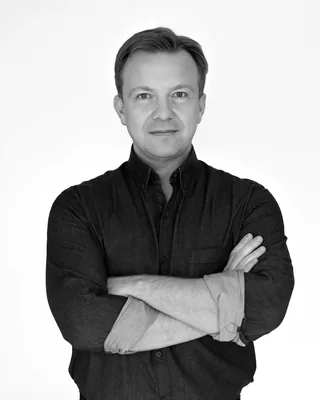
The author of the report is Grzegorz Miłkowski (opens in a new window), President of the Management Board of the AI Business Center Foundation and CEO of Brand Semantics (opens in a new window). He designed the study and is responsible for the report’s analysis and conclusions. He has worked in brand communication and technology strategy for business for more than 20 years, and today also focuses on how large language models present brands.
A model does not recommend a company because it is large. It recommends it when it finds there the answer to the buyer’s question. That is an opportunity for every company that prepares this answer and publishes it so that language models can read it and cite it.
Report, materials and open data
The full report in English and Polish (“Polski Portret Generatywny”), materials for editors and open data are available on the report page (opens in a new window). The study was carried out with the Semantio (opens in a new window) research application.
Frequently asked questions
Who prepared the report “The Generative Portrait of Poland”?
The report was prepared jointly by Brand Semantics, its publisher, and the AI Business Center Foundation, its knowledge partner. The author is Grzegorz Miłkowski, President of the Management Board of the Foundation and CEO of Brand Semantics. The report is published under the patronage of the Business Centre Club. The study was carried out with the Semantio research application.
Does the report rank language models or countries?
No. Whether Poland appears in an answer depends above all on how the question is worded, and less on which model answers it. The report describes a dated snapshot of the answers of six models to questions from individuals and companies in 12 markets. It does not assess the work of any institution either.
Do language models put Poland forward to foreign companies of their own accord?
Yes. In a separate measurement of 96 questions that do not name Poland, the models mentioned it in 98.4% of 576 answers and explicitly recommended it in 82.5% of the answers with a mention. The role Poland plays depends on the decision area the company asks about.
What does the report tell industrial companies?
To suppliers, the models describe Poland as a base that is growing, and Germany and Italy as reliable. Asked for certified Polish component suppliers, the answers name a Polish company in 5 of 30 cases. The report finds that the industrial areas lack proof of maturity: certificates, references and names, described in the markets' languages.
How can I use the report's findings in my company?
Start by checking in which decision situations your customers ask language models, and whether your company appears in the answers. The report shows that a model brings a company into an answer when it answers the specific question, and that industry lacks proof of maturity: certificates, references and names described in the markets' languages. For a single company, the Foundation measures this in its brand research in language models and helps plan content that answers buyers' questions.
Where can the report be downloaded?
The report is available in English and Polish on the report page on the Semantio website, together with the interactive semantic map of Poland, materials for editors and open data. It is published under the CC BY 4.0 licence. The link is in the section “Report, materials and open data”.
Let’s start with a conversation
If you would like to discuss what the report’s findings mean for your company or sector, arrange a conversation.